Bilingual intake · No fees · We answer the phone · (929) 333-3955
For New York Families

Care that holds the whole family — at every stage of life.

We run the OPWDD process for families of children with developmental disabilities, and we provide 24-hour, live-in, and senior care across NYC and Westchester. Intake is bilingual. For special-needs children, a family member can be paid as the caregiver. No fees, ever.
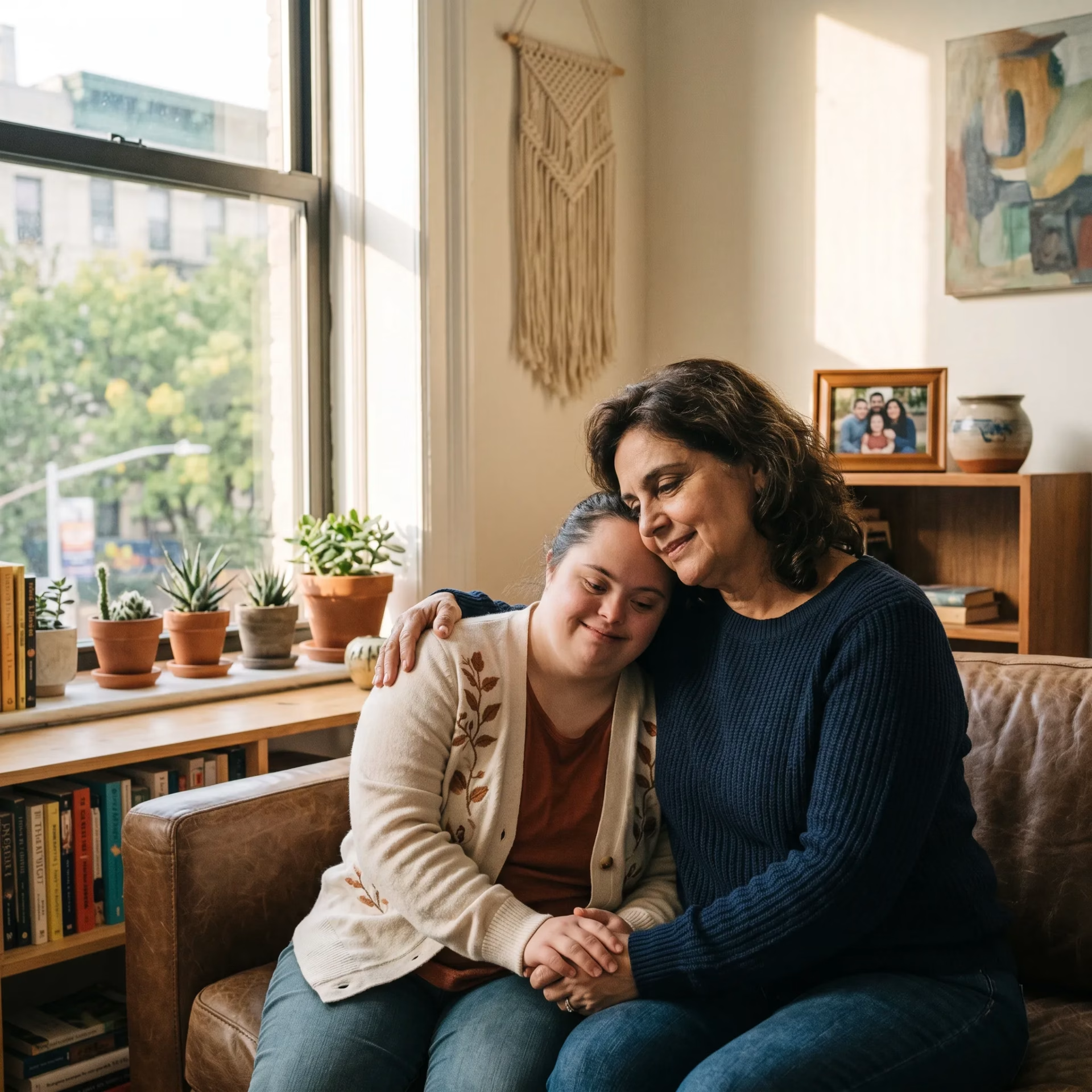
New York family in a warm home moment
800+
New York families served
300+
OPWDD approvals secured
450+
Children receiving care today
4–6 mo
Typical time to approval
Two Audiences · One Promise

Find your path.

Whether you're navigating OPWDD for your child or caring for an aging parent, we've helped hundreds of New York families just like yours.

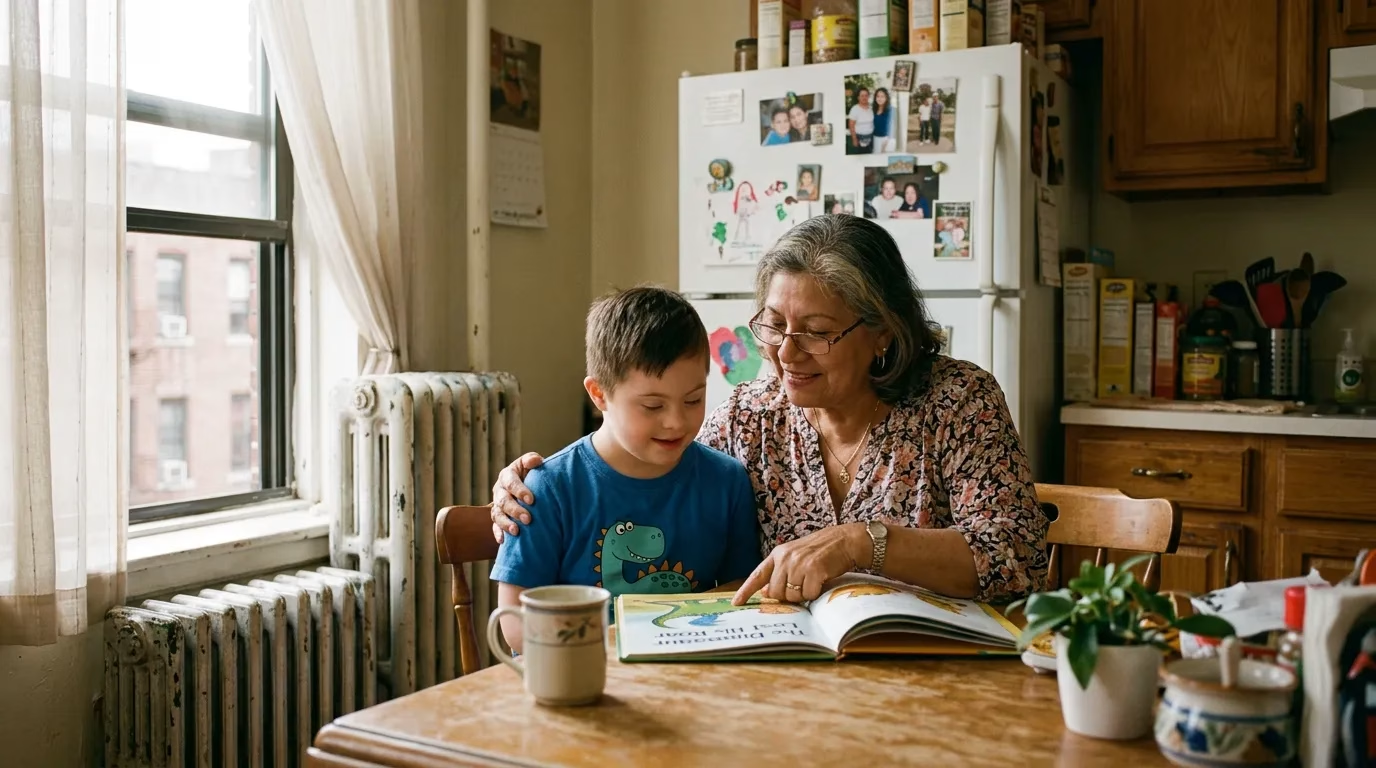
Grandmother and grandchild at home
For Families with Children

Special Needs & OPWDD

End-to-end OPWDD management plus pediatric home care for kids with autism, cerebral palsy, intellectual disability, epilepsy, and more. 4–6 months to approval, not 12–18.

See how we help
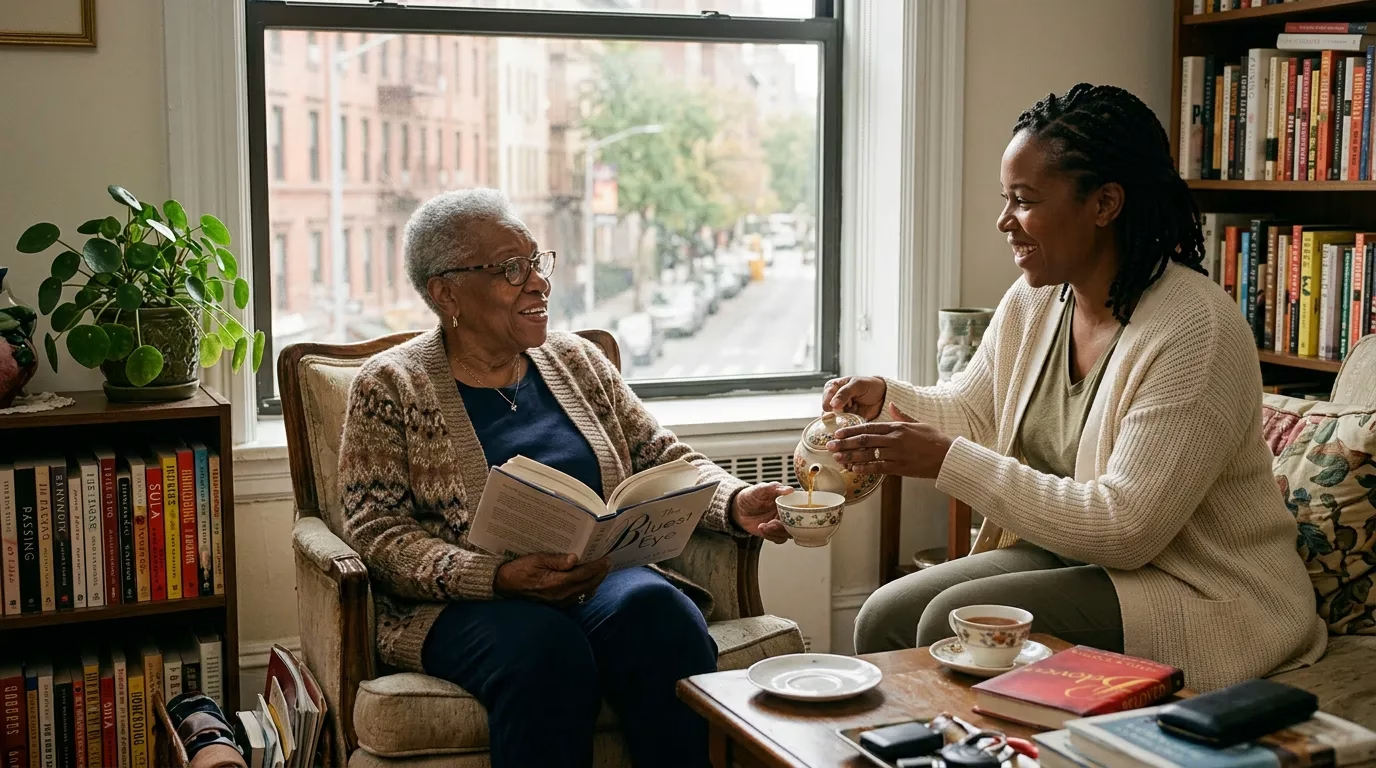
Senior and caregiver sharing tea
For Adults & Seniors

Adult & Senior Home Care

24-hour, live-in, companion care, dementia support, NHTD & TBI Waiver, Veterans' care. Care that keeps your loved one home, with dignity.

Explore options
The OPWDD Reality

Getting in takes forever. The system is supposed to help your child.

OPWDD funds the services most special-needs families need: Care Management, Community Habilitation, respite, Self-Direction, and the HCBS Medicaid Waiver.

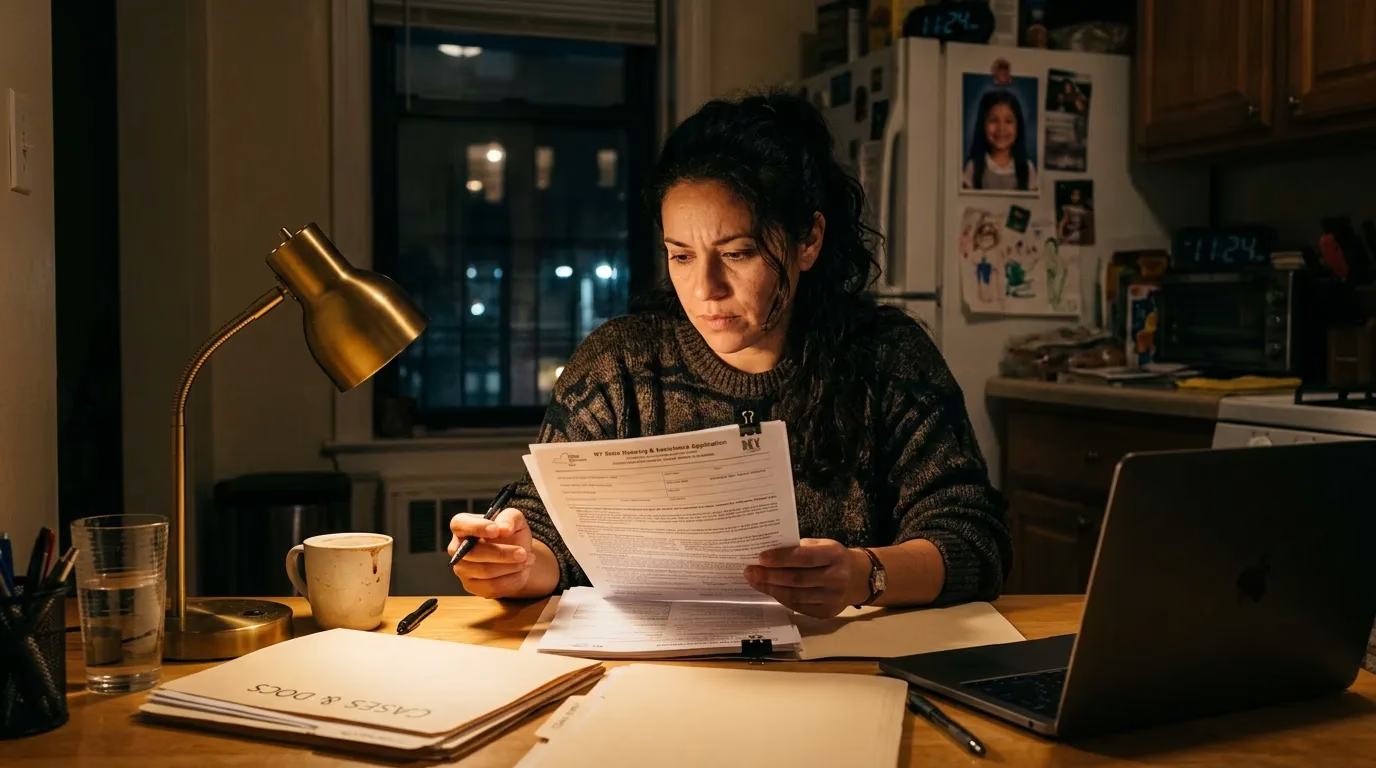
For most families navigating this on their own, getting through the door takes twelve to eighteen months. The process is a part-time job built from paperwork, evaluations, deadlines, and appeals — and most parents do it alone.

Eligibility packets Psychologist evaluations CCO enrollment Three rounds of review HCBS Waiver Appeals

Every month you wait is a month of services your child should already be receiving.

Parent working through paperwork at home
12–18 months
A year and a half — typical OPWDD timeline for families going it alone
The Amelia Way

We run the whole OPWDD process for your family.
Free, end to end.

You send us six documents from your phone. We do everything else.

Eligibility packet built — we identify what you have and chase what's missing
Evaluations scheduled with pediatric psychologists and physicians we trust
Front Door session scheduled, prepped, and we sit in with you
CCO enrollment submitted before the 10th-of-the-month deadline
CANS preparation with a worksheet and a 45-minute coaching call
Medicaid + HCBS Waiver applications filed in parallel
Every deadline tracked, status update every two weeks
Appeals handled from drafting through filing
The Amelia App

How we finish in four months, not eighteen.

Every approval, every document, every deadline lives in one place — your phone. Snap a photo of a record and it uploads in a tap. Message your case worker. Watch your case move through every stage of OPWDD as it happens.

Snap to upload. PDFs auto-generated.

Take a photo of any document: birth certificate, IEP, medical record, ID. The app converts it to PDF and files it where it belongs. No scanner. No fax. No driving to the office.

Live document checklist.

See exactly what's complete, what's pending review, and what's still missing. The list updates in real time as your case worker files each piece. No more wondering where things stand.

Direct line to your case worker.

No phone tag. Send a question, get a reply. The whole conversation is logged, time-stamped, and searchable — so nothing falls through the cracks and nothing has to be repeated.

Watch your case move.

Track your application through every stage: Eligibility, Front Door, CCO, CANS, Waiver, Services. Status updates the moment something changes, plus alerts the day before every deadline.

Your case
Eligibility & Waiver
ProgressStage 4 of 6
Eligibility packet filed
Front Door complete
CCO enrolled
CANS scheduled May 22
HCBS Waiver next
Services begin
The Difference

Months back to your family.

Going it alone

12–18 months

A year and a half is typical for families navigating OPWDD without help. Longer if the packet comes back incomplete or a denial requires appeal.

With Amelia

4–6 months

Six months is the goal — and with family cooperation, we've closed cases in four. We move every step in parallel and never let a packet come back with corrections.

What Most Families Don't Know

A family member can be paid as the caregiver.

For Children with Developmental Disabilities

In New York, most family members and friends can be hired and paid as the Home Health Aide for a child with a qualifying developmental disability. Once approved, your child's care can stay in the hands of the people who love them most.

Grandparent Adult sibling Aunt Uncle Trusted family friend

The one exception: parents and legal guardians cannot be the paid aide for their own child.

Call (929) 333-3955 to start

See if your family qualifies — in one conversation.

Whether you're navigating a new diagnosis or ready to bring care home, a care coordinator will walk you through your options. Bilingual intake. No fees, ever.

The Process, Explained

OPWDD in plain English.

Six steps from your first call to services starting in your home. Here's exactly what happens at each stage: what it requires, how long it takes, and what Amelia handles for you.

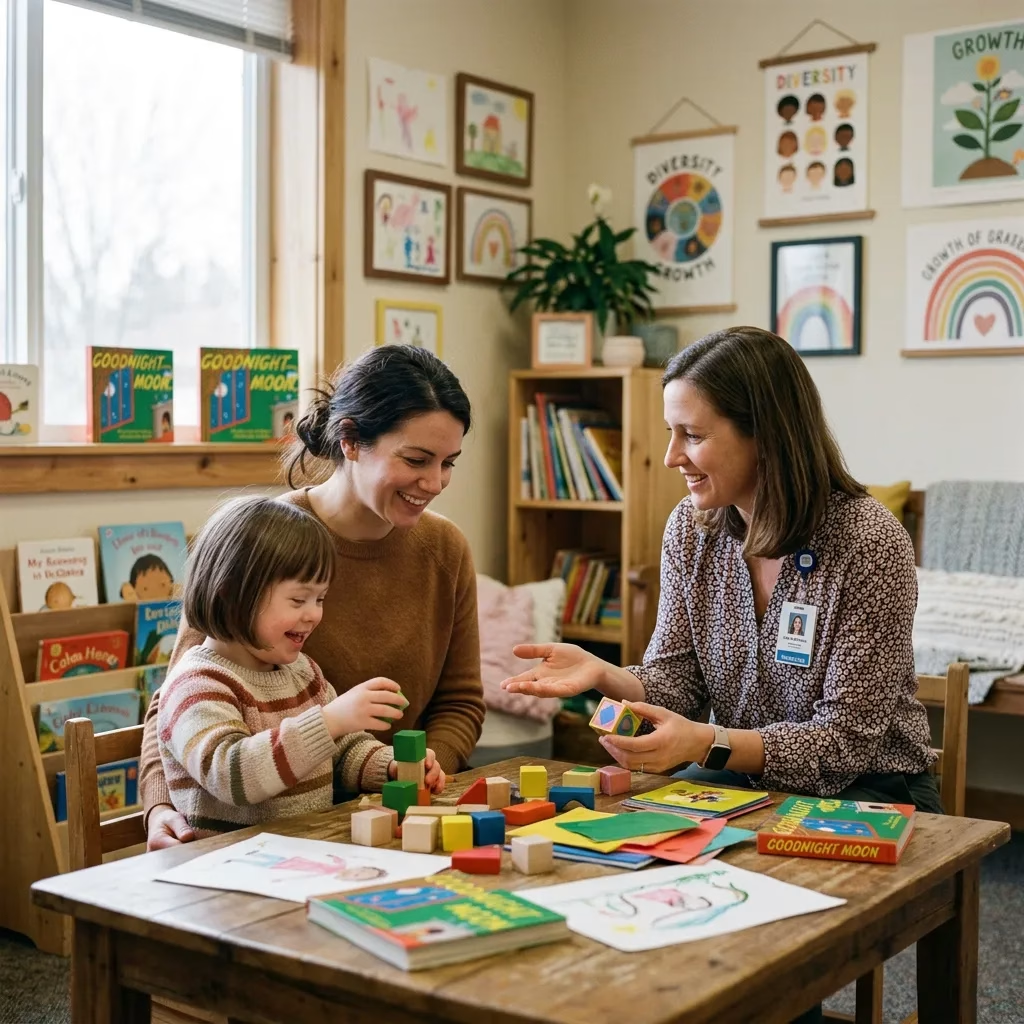
Parent and child at a pediatric evaluation
01

Eligibility — proving the disability qualifies

OPWDD eligibility requires documented proof of a qualifying developmental disability that originated before age 22 and substantially limits daily functioning. Common qualifying conditions include autism, cerebral palsy, intellectual disability, Down syndrome, and certain neurological conditions.

Typical time
4 to 8 weeks
Amelia handles
Builds the eligibility packet, schedules missing evaluations with trusted pediatric psychologists, and files the request.
Family meeting a case worker at intake
02

Front Door — the intake meeting

The Front Door is OPWDD's formal intake session where the family meets with a Developmental Disabilities Regional Office representative, learns about available services, and confirms eligibility. It's required before any services can be authorized.

Typical time
2 to 4 weeks from scheduling
Amelia handles
Preps the family, schedules the session, and joins it alongside you to ensure every relevant service path is opened.
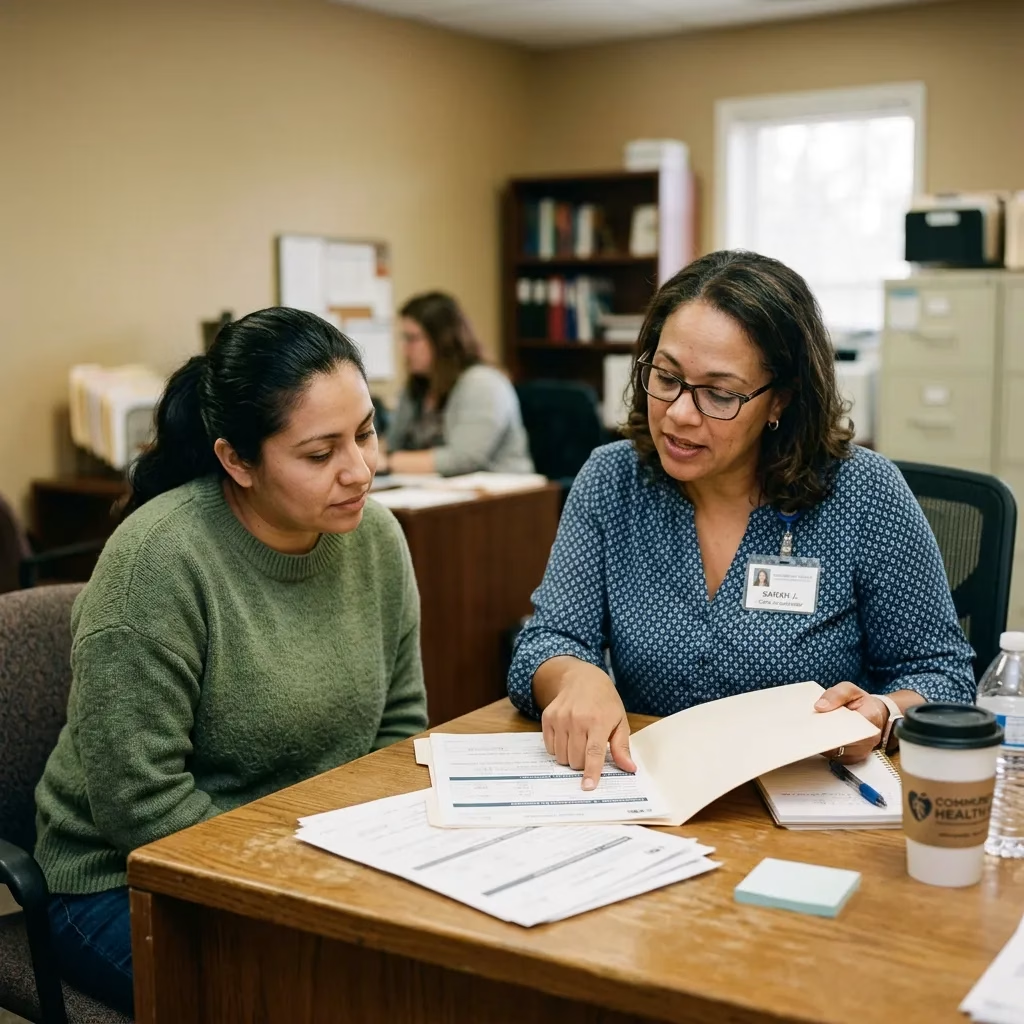
Care coordinator reviewing paperwork with a parent
03

CCO enrollment — picking your care coordinator

A Care Coordination Organization (CCO) becomes the central point of contact for all OPWDD services. Enrollment paperwork has to be filed before the 10th of the month to take effect the following month. Miss this deadline and you lose a full month of progress.

Typical time
4 to 6 weeks
Amelia handles
Files enrollment before the deadline and helps the family choose the CCO best suited to their case.
Calm assessment conversation with a parent
04

CANS assessment — determining the level of services

The Child and Adolescent Needs and Strengths (CANS) assessment is a structured interview the CCO uses to decide the level and type of services a child receives. Under-reporting on the CANS is the single most common reason families end up with fewer hours than they qualify for.

Typical time
3 to 6 weeks
Amelia handles
Sends a CANS prep worksheet and holds a 45-minute coaching call so nothing is under-reported.
Relieved parent reading an approval letter at home
05

HCBS Medicaid Waiver — the funding source

The Home and Community-Based Services (HCBS) Medicaid Waiver funds in-home care, Community Habilitation, Self-Direction, respite, and most other OPWDD services. Eligibility is based on the child's income alone — not the parents'. Most families assume their income disqualifies their child. It usually doesn't.

Typical time
6 to 10 weeks
Amelia handles
Files the HCBS Waiver application in parallel with CCO enrollment so neither step waits on the other.
Home health aide caring for a child at home
06

Services begin — care in the home

Once the Waiver is approved, services start in the home: pediatric home health aide care, Community Habilitation, respite, and — with Self-Direction — a paid family-member caregiver arrangement. Amelia stays on as your home care agency.

Typical time
2 to 4 weeks after Waiver approval
Amelia handles
Onboards the chosen caregiver, manages payroll and compliance, and provides ongoing care coordination.
Common Questions

Answers from families we've actually helped.

Eligibility
OPWDD serves people of any age with a qualifying developmental disability that originated before age 22 and substantially limits everyday functioning. Common qualifying conditions include autism spectrum disorder, intellectual disability, cerebral palsy, Down syndrome, epilepsy with cognitive impact, and other neurological conditions. Eligibility is determined by documented diagnosis plus functional limitations, not family income.
OPWDD covers autism spectrum disorder, intellectual disability, cerebral palsy, Down syndrome, Prader-Willi syndrome, neurological impairment, and familial dysautonomia, among others. A diagnosis alone isn't enough — OPWDD also requires documentation of how the condition affects daily functioning.
You need your child's birth certificate, Social Security card, proof of New York residency, any medical records or prior diagnoses, the most recent IEP if school-age, and any psychological or developmental evaluations. If something is missing, Amelia schedules the evaluation for you. Families upload all six documents from their phone through the Amelia App.
Yes. Most OPWDD denials are reversible because they come from missing documentation, an under-reported CANS assessment, or a diagnosis that needs re-evaluation by a clinician OPWDD recognizes — not from a child who truly doesn't qualify. Amelia handles appeals from drafting through filing.
Process & Timeline
For families navigating OPWDD alone, the typical timeline is 12 to 18 months. For Amelia families, it's 4 to 6 months — and with family cooperation we have closed cases in 4. The difference comes from running every step in parallel, using the Amelia App, and never letting a packet come back with corrections.
The Front Door is OPWDD's formal intake meeting where the family learns about available services and confirms eligibility. Amelia preps the family on what will be asked, joins the session, and ensures every relevant service path is opened.
The Child and Adolescent Needs and Strengths (CANS) assessment is a structured interview the CCO uses to determine the level and type of services. Under-reporting is the single most common reason families end up with fewer services than they qualify for. Amelia prepares every family with a worksheet and a 45-minute coaching call.
Most denials are reversible — missing documentation, an under-reported CANS, or a diagnosis that needs re-evaluation. Amelia handles appeals start to finish: drafting the response, gathering supplemental evidence, and filing within the deadline.
Cost & Medicaid
For most families, $0. OPWDD case management is free. Intake consultations are free. Home care services are paid through Medicaid, not the family. Amelia never bills the family — not for guidance, not for the OPWDD process, and not for ongoing home care.
Yes, very likely. When your child is enrolled in the HCBS Medicaid Waiver, Medicaid eligibility is based on your child's income alone — not yours. Families earning $75,000, $150,000, or much more often assume their child can't qualify and are usually wrong.
No. The HCBS Medicaid Waiver runs alongside any existing Medicaid coverage and doesn't replace it. It expands what is funded — adding home care, Community Habilitation, respite, Self-Direction and more — without removing prior coverage.
Family Caregiver
Yes, for special-needs children specifically. In New York most family members and friends — grandparents, adult siblings, aunts, uncles, trusted family friends — can be hired and paid as the Home Health Aide for a child with a qualifying developmental disability. The one exception: parents and legal guardians cannot be the paid aide for their own child.
Pay rates are set by Medicaid and vary slightly by service type and region. In New York City, family Home Health Aides typically earn the prevailing HHA wage including required benefits — competitive with non-family aides. Amelia handles all employment paperwork, payroll, and tax forms.
Yes. The family member must complete Home Health Aide certification, a state-approved training program. Amelia connects families to training partners and handles the paperwork. Training can typically be completed while the OPWDD application is in process.
Services
OPWDD funds pediatric home health aide care, Community Habilitation, Self-Direction, respite care, day habilitation, supported employment, family support services, and the HCBS Medicaid Waiver. The specific mix depends on the child's CANS assessment and Individualized Service Plan.
Community Habilitation (Com Hab) is one-on-one support that helps a child or adult with a developmental disability build skills in their own community — at home, school, or in public. It covers communication, daily living skills, social skills, and community integration. Hours are set by the service plan.
Self-Direction is an OPWDD option that gives families a budget and the authority to decide how to spend it on approved services — including hiring their own staff. It's the pathway most families use when they want a family member to be the paid caregiver. Amelia helps set up and manage Self-Direction budgets.
Coverage & Logistics
All five boroughs of New York City — Brooklyn, the Bronx, Manhattan, Queens, and Staten Island — plus Westchester County. We have offices in Brooklyn at 3007 Ocean Parkway and in the Bronx at 384 East 149 Street.
Amelia provides bilingual intake and ongoing case management in English, Spanish, Russian, Mandarin, Bengali, Haitian Creole, and Arabic. Families are matched with a case worker who speaks their primary language.
Careers & Hiring
Yes. Amelia recruits Home Health Aides across all five boroughs of New York City and Westchester County. Bilingual candidates, pediatric and special-needs HHAs, and aides willing to take live-in assignments are in particularly high demand.
Competitive wages set by Medicaid for the region, direct deposit, a potential referral bonus, flexible part-time and full-time scheduling, and ongoing training and continuing education. Aides can request preferred boroughs and shift types.
New York State requires Home Health Aide certification, a state-approved training program. Amelia connects new hires to training partners and handles the paperwork. Already-certified HHAs can begin work right after a brief onboarding.
Where We Serve

All five boroughs. Westchester. Every family.

Two offices, one team, hundreds of New York families a year.

Brooklyn The Bronx Manhattan Queens Staten Island Westchester
Brooklyn Office

3007 Ocean Parkway, 1st Floor
Brooklyn, New York 11235
Phone: (929) 333-3955

Bronx Office

384 East 149 Street, Suite #400
Bronx, New York 10455
Phone: (929) 333-3955

In Their Own Words

Five stars, from families who lived it.

5.0 across 127 reviews on Google, Care.com, and parent groups
OPWDD · Pediatric

"Three other parents told me OPWDD takes 'over a year, get ready.' We called Amelia in November. Daniel had services starting in March. The app made the document piece something I could do during nap time."

Maria R.
Mom of Daniel, 8 — Autism · Brooklyn
OPWDD · Family Caregiver

"I was already taking care of Sofia every day after school while my daughter worked. Amelia explained I could be paid for it. Same work — but now it's how I earn my living."

Lourdes M.
Grandmother of Sofia, 6 — Cerebral Palsy · Bronx
OPWDD · Pediatric

"We were told for years our income disqualified Arjun. It was wrong — the Waiver is based on his income, not ours. His Community Hab hours started this spring. I wish we'd found them three years sooner."

James & Priya K.
Parents of Arjun, 11 — Autism · Manhattan
OPWDD · Appeal Won

"We were denied twice trying to do it ourselves. Amelia rebuilt the packet, fixed the CANS reporting, and Misha was approved on the third try. The app showed us exactly where things stood."

Yelena S.
Mom of Misha, 9 — Intellectual Disability · Queens
Senior · Live-In

"My mother has Alzheimer's. We were ready to move her to memory care until Amelia placed a live-in aide who's been with her for eight months. Mom is still in the home she's lived in for forty years. That's everything."

David L.
Son of Margaret, 78 — Alzheimer's · Westchester
Senior · 24-Hour

"After my father's stroke, the hospital wanted to send him to rehab. We brought him home with 24-hour care instead. The caregiver speaks Spanish — my dad and his caregiver actually have conversations."

Carmen V.
Daughter of Roberto, 82 — Post-Stroke · Staten Island
Hand It to Us

You focus on your family. We focus on the process.

Whether you're starting from scratch, stuck mid-application, or navigating a denial — call us. No fee for the conversation.

(929) 333-3955
Bilingual intake · No fee · We answer the phone
We're Hiring

Join the team behind the families.
Home Health Aides wanted across NYC and Westchester.

Bilingual caregivers, pediatric and special-needs HHAs, and live-in aides especially needed. Competitive Medicaid-set wages, flexible scheduling, paid training for new hires, and the option to be the paid caregiver for a family member with a developmental disability.

See open positions Or call (929) 333-3955